
Gemini 3.5, Omni, Antigravity 2.0: Google's New Lineup Trails Opus and GPT-5.5
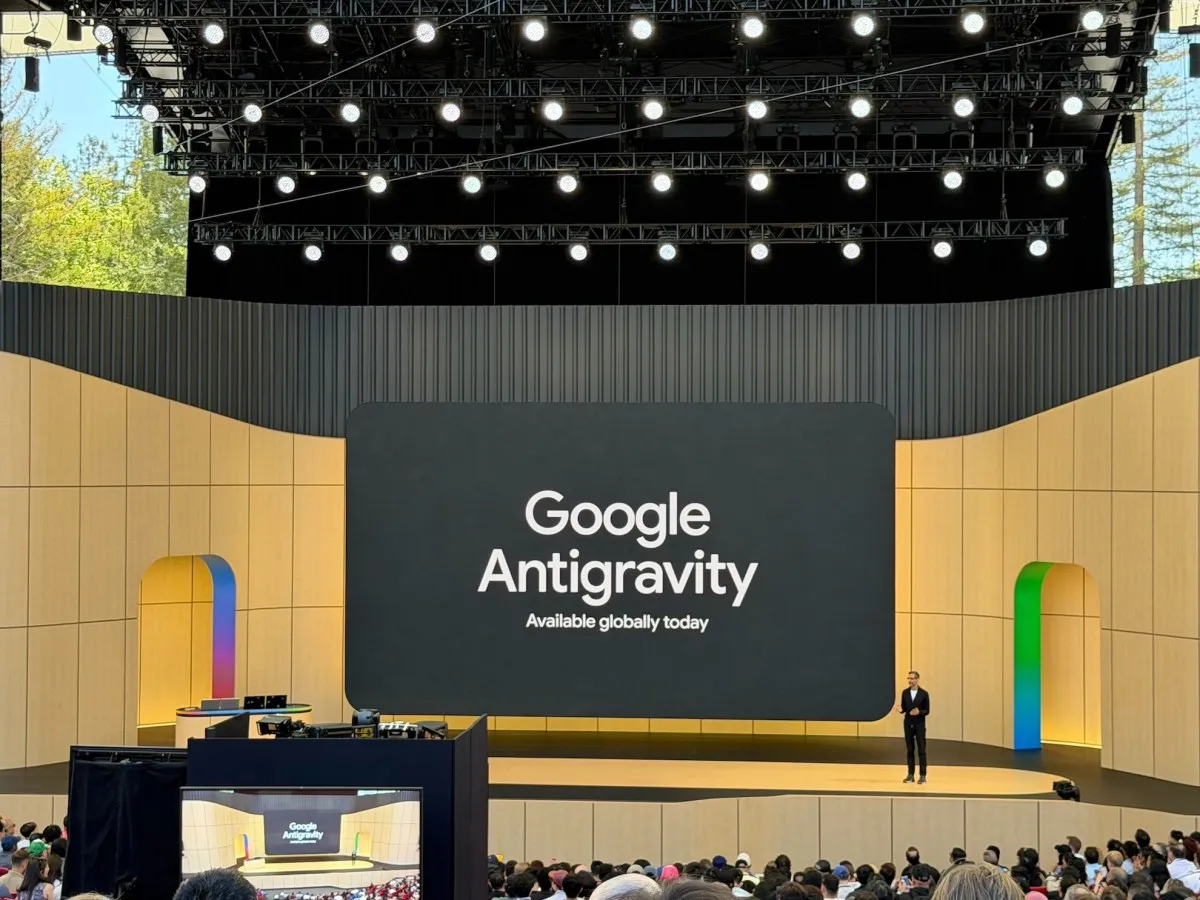
On May 19, 2026, at the Shoreline Amphitheatre in Mountain View, Google unveiled Gemini 3.5 Flash, Gemini Omni Flash, and Antigravity's earlier quota rollback during its I/O 2026 keynote.
Google framed Gemini 3.5 Flash as a next-generation frontier model built to surpass Gemini 3.1 Pro in coding and agentic workflows, positioned Gemini Omni Flash as a native multimodal model starting with video inputs, and pitched Antigravity 2.0 as an orchestrator for developer tasks.
However, early industry reception has been sharply divided.
In benchmarks against established frontier systems like Claude 4.7 Opus and GPT-5.5, the newly released Gemini 3.5 Flash fell short of the performance threshold required for top-tier status.
Furthermore, Gemini Omni Flash shipped with Google withholding its most powerful real-time voice editing features for safety reasons, while developer forum feedback for Antigravity 2.0 has been bogged down by stability complaints.
Gemini 3.5 Flash: Outperforming 3.1 Pro, But Falling Short of the Frontier Standard

The core discrepancy in this SOTA benchmark comparison begins at the very top of Google's new model hierarchy.
In its official launch post, Google highlighted Gemini 3.5 Flash scoring 90.4% on GPQA Diamond and 78% on SWE-bench Verified, presenting it as a premier engine for developer agents. However, the keynote comparison was strictly limited to Google's own predecessor, Gemini 3.1 Pro.
But the true competitive benchmark sits a level higher.
Anthropic's Claude 4.7 Opus commands a 94.2% score on the same GPQA test and an 87.6% success rate on SWE-bench Verified. Similarly, OpenAI's GPT-5.5 scores 93.6% on GPQA, with its premium Pro variant reaching 94.4%.
When compared directly, Gemini 3.5 Flash lags behind these rivals on both critical benchmarks.
Industry analysts note that Google's decision to avoid head-to-head comparisons on stage reflects a tacit acknowledgment of this performance gap. Claiming a 'frontier' classification while only outperforming its own older mid-tier model suggests Google is grading its progress on a curve.
Gemini Omni: Multi-Modal Versatility Undermined by Held-Back Audio Features

This competitive disparity is equally visible in the release of Gemini Omni Flash.
Gemini Omni Flash began rolling out on May 19 to Gemini AI premium tiers and creative applications like Flow and YouTube Shorts. The system allows users to combine text, image, audio, and video inputs within a single prompt and refine them via conversational, turn-based dialogue.
However, Google withheld the model's most compelling capability at launch.
According to the official Google blog, the feature designed to edit video soundscapes and regenerate spoken audio is undergoing further safety evaluations. By locking away this audio-editing technology to prevent deepfake exploitation, Google has limited Omni's ultimate utility as an end-to-end video solution.
Furthermore, video clip processing remains capped at 10 seconds, with API developer access deferred to a future rollout.
On open benchmarks, ByteDance's Seedance 2.0 maintains the lead in raw video generation quality, while Kling 3.0 remains dominant in the Asian market. Early testers note that while Gemini Omni excels at conversational prompt-based adjustments, its baseline visual generation quality is noticeably weaker than its specialized competitors.
Antigravity 2.0: Standalone Transition Meets Friction in Developer Community

While Gemini Omni aimed to redefine multimodal interaction, Antigravity 2.0 attempted to overhaul Google's developer tooling ecosystem.
Google rebuilt the tool as a standalone application featuring multi-agent orchestration, subagent workflows, background task scheduling, and native integrations with Google AI Studio, Android, and Firebase. Alongside this launch, Google introduced a new SDK and prompted existing Gemini CLI developers to migrate to its updated command-line interface.
However, the initial response in the developer forum was mixed, highlighting functional bottlenecks.
Early adopters praised the UI design, favorably comparing it to products like Lovable, Bolt, Replit, Windsurf, and Cursor. Yet, these compliments were quickly overshadowed by complaints of chaotic error resolution, where resolving one syntax error frequently triggered a cascade of new ones, as well as application freezes on entry-level Apple silicon and a lack of SSE protocol support in its MCP implementation.
Furthermore, the balance of power in coding benchmarks has not changed.
No matter how polished the interface, Antigravity 2.0 remains bottlenecked by its underlying intelligence. The engine gap between Claude 4.7 Opus's 87.6% and Gemini 3.5 Flash's 78% on SWE-bench Verified remains the defining limitation for Google's new developer suite.
Google's Simultaneous Launch Strategy Sacrifices Core Product Polish
A consistent underlying pattern connects the development cycle of all three product lines.
Gemini 3.5 Flash claimed the 'frontier' label while avoiding head-to-head performance benchmarks against top-tier competitors on stage. Gemini Omni Flash debuted with its most promising multimodal voice features disabled. Meanwhile, Antigravity 2.0 presented developers with a structural tool shift, only to force them into debugging early stability flaws immediately after installation.
The strategic cadence remains unchanged: rapid public announcements followed by highly protracted feature completion.
This trend reflects the systemic challenges of Google's broader I/O 2026 keynote overhaul. When a single developer keynote attempts to overhaul models, mobile applications, search services, and mobile operating systems simultaneously, individual products are pushed to market without receiving the dedicated focus necessary for a polished user experience.
Rising Performance Pressure and Value Loss: Google's Search for a Quick Rebound
To make matters worse, Google is facing growing criticism regarding its newly announced API pricing structure.
Gemini 3.5 Flash API rates were set at $1.50 per million input tokens and $9.00 per million output tokens. This represents a roughly 3x cost increase compared to the previous Gemini 3 Flash Preview generation, effectively dismantling the high-volume, cost-effective advantage that Google had previously leveraged to secure enterprise market share.
As a result, memories of the previous Gemini pricing overhaul and the subsequent developer backlash are beginning to surface within the developer community.
Under these conditions, Google requires an immediate tactical pivot to regain momentum.
Whether it is an accelerated launch timeline for Gemini Omni Pro, a swift stability update for Antigravity 2.0, or a tactical price reduction for Gemini 3.5 Flash, Google must deliver a concrete solution before the post-launch enthusiasm completely dissipates.
- Google Blog - Gemini 3.5 is built to help you execute complex, agentic workflows
- Google Blog - Gemini Omni Flash: create anything from any input — starting with video
- TechCrunch - Google launches Antigravity 2.0 with an updated desktop app and CLI tool at I/O 2026
- TechTimes - Google launches Gemini Omni video model, holds back its riskiest feature
- Google AI Developer Forum - Antigravity review — first impressions and bug reports