
Gemini's Pricing Overhaul: A Discount on Paper, a Downgrade in Practice
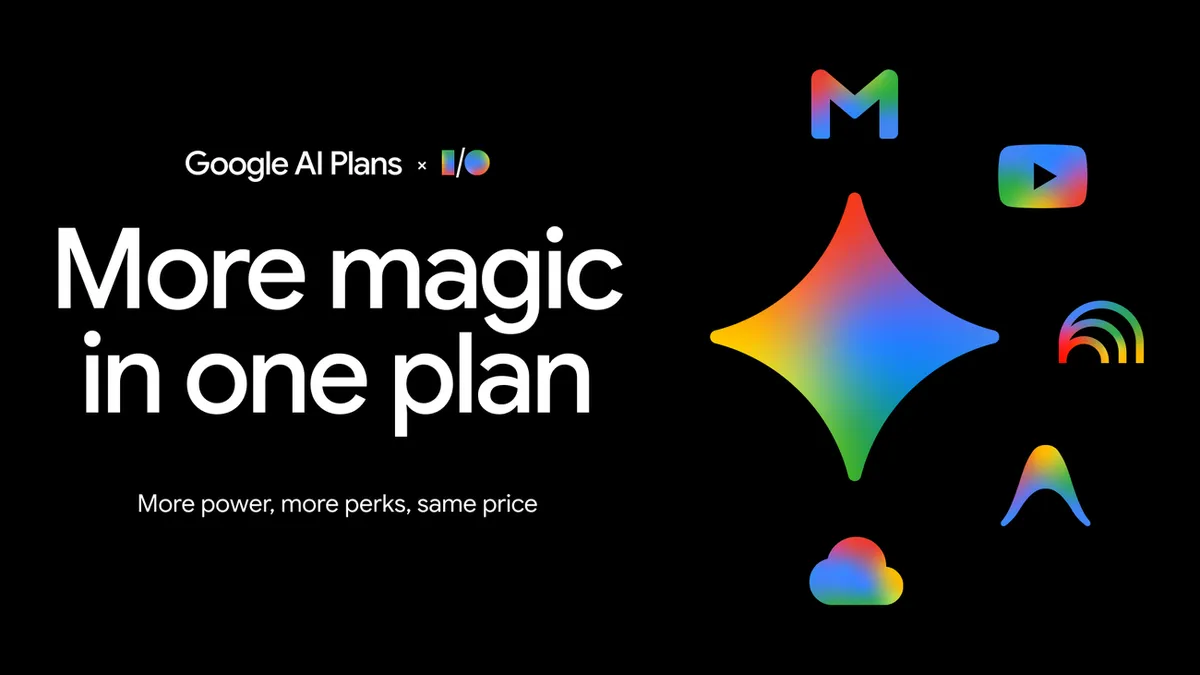
Google cut AI Ultra to $200 and added a $100 tier, but switching to compute-based weekly limits has paid subscribers calling it a real-terms downgrade.
Google overhauled its Gemini consumer subscriptions on May 19, in the shadow of the I/O 2026 keynote. A new $100/month AI Ultra tier joined the lineup, and the existing top-end AI Ultra dropped from $250 to $200 — a $50 cut.
On the surface, that reads as a discount. But the same announcement quietly rewrote how Google measures usage. The old daily prompt count is gone, replaced by what Google's support documentation now calls 'compute-based' weekly limits.
Paid subscribers' anger landed on the second change, not the first.
The Surface Overhaul: A New $100 Tier and a Top-End Price Cut
Google's May 19 announcement split the AI Ultra line into two steps. A new $100/month tier was added, and the existing $250 top-end plan dropped to $200.
AI Pro stayed at $20/month and AI Plus at $8/month. AI Pro also picked up free YouTube Premium Lite in select countries.
By price alone, subscribers came out ahead: the top Ultra is cheaper, and a new mid-Ultra entry point opened.
The community read it differently — not as a discount, but as a downgrade.
The Core Shift: Transitioning to a Compute-Based Weekly Meter

The source of the 'downgrade' label was not the pricing, but the underlying shift in how Google measures consumption. The meter itself changed.
Gemini's old limit was a daily prompt count you could read at a glance: '100 used today.' A May 17 Google support article retired that counter.
The new limit is calculated from prompt complexity, the features used (image and video generation, Deep Research, Deep Think), and chat length — all rolled into a single compute-based budget.
The refresh cadence shifted alongside it. Instead of a midnight reset, the budget refreshes partially every five hours, with a separate weekly cap on top. PCWorld framed it as the natural ceiling of flat-rate consumer AI plans.
The table below makes the size of the shift more visible.
| Item | Before (Jan 2026) | After (May 17·19, 2026) |
|---|---|---|
| AI Pro — Thinking model | 300 prompts/day (separate pool) | Merged into compute pool (4× standard) |
| AI Pro — Gemini 3 Pro | 100 prompts/day (separate pool) | Merged into compute pool (4× standard) |
| AI Pro — Nano Banana Pro images | 100/day | Drawn from the same compute pool |
| AI Pro — Veo video | 3/day | Drawn from the same compute pool |
| AI Ultra — Thinking model | 1,500 prompts/day (separate pool) | Merged into compute pool (20× standard) |
| AI Ultra — Gemini 3 Pro | 500 prompts/day (separate pool) | Merged into compute pool (20× standard) |
| AI Ultra — Nano Banana Pro images | 1,000/day | Drawn from the same compute pool |
| AI Ultra — Veo video | 5/day | Drawn from the same compute pool |
| AI Ultra — Deep Think | 10/day (Ultra-only) | 10/day (Ultra-only, unchanged) |
| Refresh cadence | Daily midnight reset | 5-hour rolling + weekly cap |
| AI Ultra top-tier price | $250/month | $200/month |
| New tier | — | AI Ultra $100/month |
The AI Pro Downgrade: Reversing a Four-Month-Old Policy
The impact is particularly acute for AI Pro subscribers. In January, 9to5Google reported that Google had, in response to 'user feedback,' split the Thinking and Pro model pools into separate allocations.
At that point, AI Pro subscribers received 300 Thinking prompts and 100 Pro prompts as independent pools; exhausting one did not affect the other.
The May overhaul, however, merged these back into a single compute pool. Thinking, Pro, image generation, and video now all draw from the same resource limit.
This marks a complete reversal in just four months, erasing the 'predictable usage' that January's split was designed to provide.
Failed Generations and Hidden Metrics: Subscriber Backlash Mounts

The policy reversal affected subscribers almost immediately. On Reddit, r/GeminiAI was flooded with reports from AI Pro subscribers who hit their five-hour caps after only a few complex prompts.
Threads on r/GeminiFeedback highlighted further issues, including reports that failed generations were still deducted from the quota and that the dashboard no longer displayed a numeric breakdown of remaining usage.
Google's updated support documentation states that 'limits may change without notice, including due to capacity constraints.' For subscribers, the monthly quota has transitioned from a predictable cap into an unpredictable variable.
The Deep Think Exception: Opaque Budgets vs. Transparent Caps
Google preserved only one explicit exception to this new model: the Ultra-exclusive Deep Think feature still counts in clean integers, capped at 10 prompts per day.
Consequently, only the most expensive capability remains transparently metered. All other interactions—standard chat, image generation, and video—are drawn from the opaque compute pool.
This asymmetry has become the focal point of subscriber backlash. As users summarize the shift: prices came down, but the meter went dark.
The New Era of Consumer AI: Competing on Transparency, Not Price
Google is not alone in obscuring its usage meters. Last month, GitHub replaced Copilot's 'premium request units' with an 'AI Credits' system that bills users directly based on token consumption.
Conversely, some competitors are expanding access; Anthropic recently doubled limits for Claude Pro and Claude Max. PCWorld attributed this increased capacity to Anthropic's new compute agreement with SpaceX.
These shifts show that consumer AI subscriptions have outgrown simple 'pay $X for Y prompts' structures. In the coming months, the core competitive front will likely shift from pricing to how transparently providers display remaining compute allocations.

- Google Blog - Google AI subscriptions: AI Pro and Ultra updates
- Google Support - Usage limits in Gemini Apps
- PCWorld - Google just made big changes to Gemini usage limits
- 9to5Google - Gemini 3's Thinking and Pro now have independent usage limits
- Reddit r/GeminiFeedback - Gemini is turning into absolute garbage — completely