
Pope Leo's First Encyclical Urges AI Slowdown
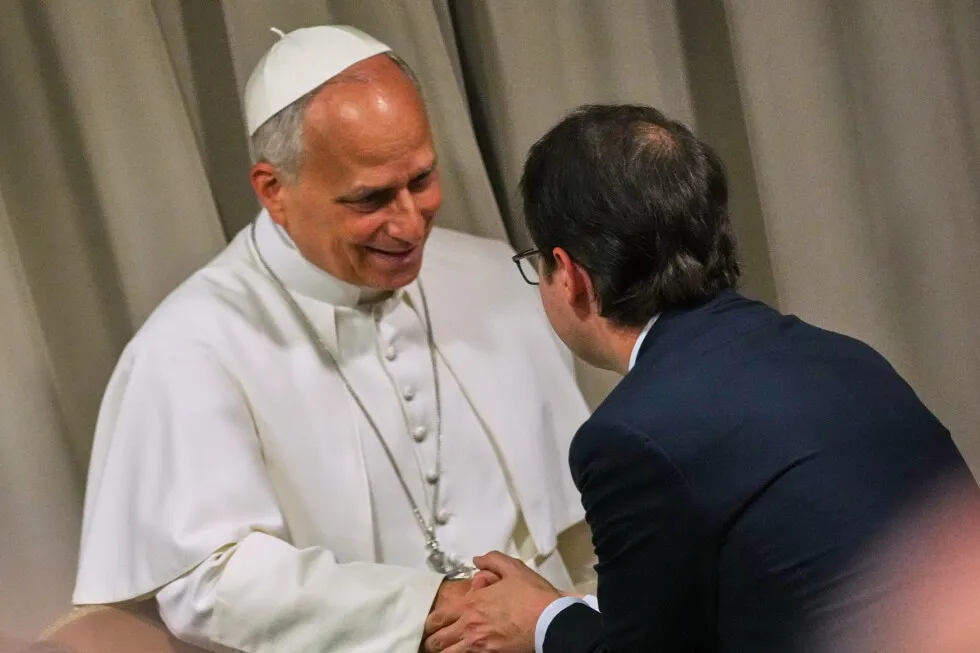
Pope Leo XIV's first encyclical urges disarming AI and slowing down, a sharp critique of concentrated tech power as Anthropic shared the Vatican stage.
Pope Leo XIV released his first encyclical, "Magnifica Humanitas," at the Vatican on May 25, 2026. Subtitled "On Safeguarding the Human Person in the Time of Artificial Intelligence," the five-chapter, 40,000-word text ranks among the most authoritative teaching documents a pontiff can issue.
The core message is blunt: Leo repeatedly urged AI developers and policymakers to "just slow down" and reflect on their trajectory. The first U.S.-born pope has labeled AI the single biggest challenge facing humanity since his election.
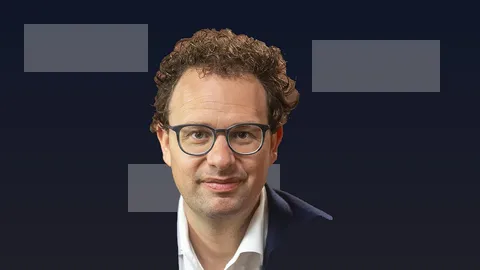
The presentation's telling detail was who stood beside him. Anthropic co-founder Christopher Olah shared the Vatican stage, though the encyclical's sharpest critique targets the exact power dynamic his industry represents—making the optics of a joint declaration deeply complex.
Calls to Disarm Artificial Intelligence
The encyclical’s firmest language appears in its chapter on modern warfare. "Artificial intelligence now demands to be disarmed," Leo wrote, urging it be "freed from logics that turn it into an instrument of domination, exclusion and death."
He established a concrete boundary against entrusting lethal, irreversible decisions to automated systems. "There is no algorithm that can make war morally acceptable," the text states, arguing that technology allowing strikes without seeing a human face inherently lowers the moral threshold of conflict.
He went further, declaring the Catholic Church's centuries-old "just war" theory "outdated" in the face of autonomous weapons. Setting aside a doctrine that historically justified the use of force, Leo pressed instead for dialogue, diplomacy, and forgiveness.
AI Ethics and the Concentration of Power
Beyond warfare, Leo warned against the rapid concentration of AI capabilities. He repeatedly highlighted the dangers of technology and data consolidating within a few private firms, noting that the resulting risks fall disproportionately on children and vulnerable populations.
His proposed remedy favors robust institutions over abstract slogans. "It is not enough to invoke ethics in the abstract," he wrote, calling for "robust legal frameworks, independent oversight, informed users and a political system that does not abdicate its responsibility." The core thesis is encapsulated in a single line: "A more moral AI is not enough if that morality is determined by a few."
This rests on the premise that "technology is never neutral," but rather adopts the characteristics of those who design, finance, and deploy it. Consequently, Leo demanded external government regulation rather than relying on the tech industry's internal ethics boards.
The Vatican's Silicon Valley Outreach
This institutional focus explains why a target of such regulation stood beside the pope. Anthropic co-founder Christopher Olah spoke at the launch, marking the latest step in a decade of Vatican outreach to Silicon Valley leaders.
Olah welcomed the criticism, arguing that external checks on researchers are fundamental to ensuring the technology benefits humanity. Citing "a real possibility that AI will displace human labor at a very large scale," he stated, "We need informed critics who will tell the labs when we are failing. We need moral voices that the incentives cannot bend."
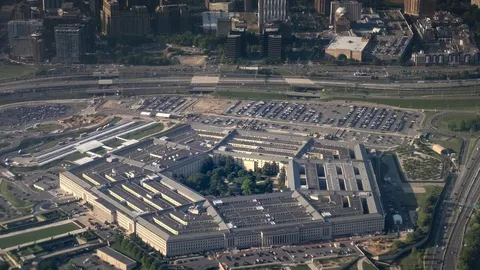
The invitation drew some criticism for acting as a papal stamp of approval for a single AI firm. Brian Boyd of the Future of Life Institute pushed back. He read the moment as "a recognition of... an extremely powerful company that's currently winning this race" — closer to a diplomatic meeting than an endorsement. The stakes here are not abstract, as the AP reported. Anthropic is currently suing the Trump administration over a federal ban. The trigger was its refusal to grant the military unrestricted access to its models.
A 135-Year Echo on Labor and Progress
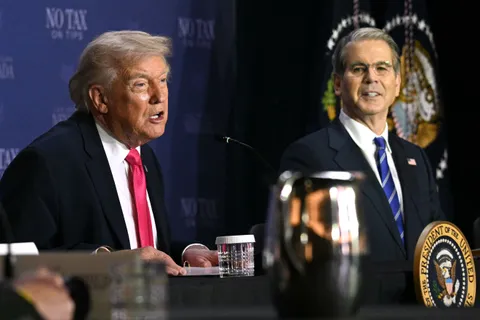
The Anthropic lawsuit highlights a broader ideological clash. The Trump administration has moved aggressively to deregulate the sector, recently shelving an executive order that would have mandated government pre-release reviews for frontier models. This leaves a White House racing to loosen rules and a U.S.-born pontiff urging caution firmly on opposite sides.
The date Leo XIV signed the text was highly deliberate. May 15 marked exactly 135 years since Pope Leo XIII promulgated "Rerum Novarum," a landmark encyclical on workers' rights. Operating on the belief that the AI revolution poses the same existential questions as the Industrial Revolution, the current pope explicitly timed the release to honor his namesake.
Consequently, labor rights received significant focus. "The pursuit of greater profits cannot justify choices that systematically sacrifice jobs, because the human person is an end, not a means," he wrote. He notably paired the statement with the first-ever papal apology for the Church's historical role in legitimizing slavery.
UNESCO welcomed the document almost immediately, but its ultimate impact remains an open question. In Leo's framing, the core choice is not between enthusiasm and fear, but between progress that serves humanity and progress that subjects it to centralized power. Whether an appeal to slow down can withstand the pressure of Silicon Valley's quarterly earnings expectations will be tested by the very companies standing on the Vatican stage.
- AP - Pope Leo XIV urges AI regulation for the common good
- Vatican News - Pope Leo's 'Magnifica humanitas': AI must serve humanity not concentrate power
- Vatican.va - Encyclical Letter Magnifica Humanitas (full text)
- Holy See Press Office - Presentation of the Encyclical Magnifica Humanitas
- UNESCO - UNESCO welcomes the encyclical Magnifica Humanitas