
NVIDIA Unveils Vera: A CPU for Agentic AI
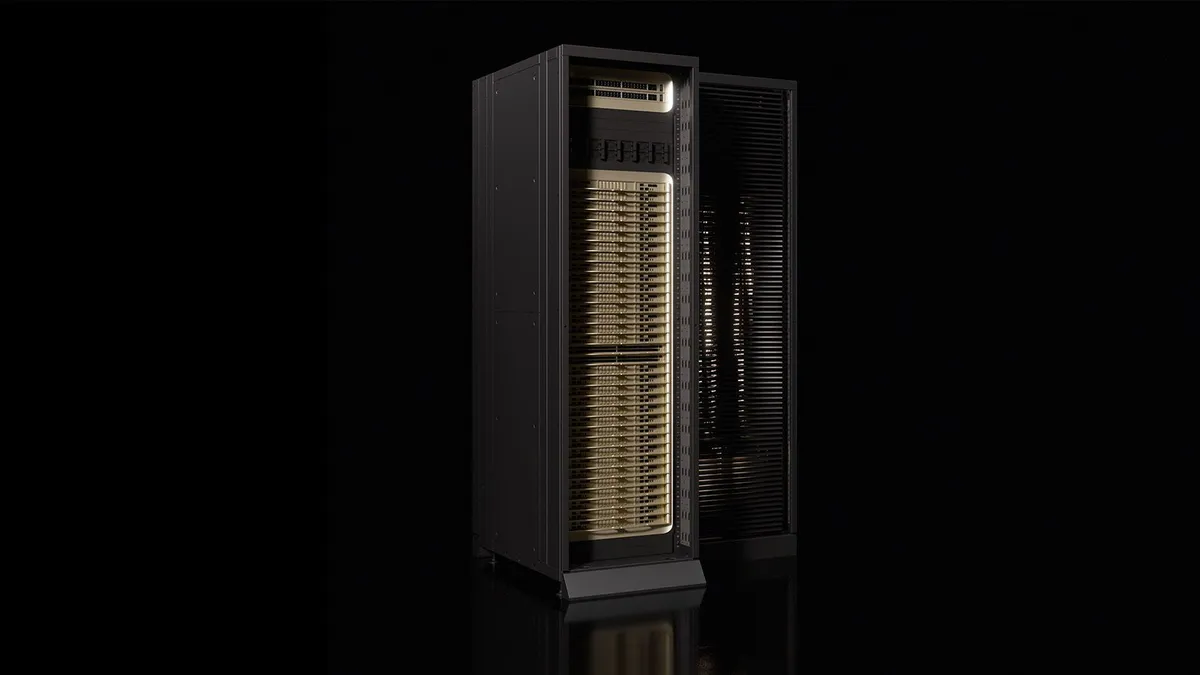
NVIDIA unveiled Vera at GTC 2026 — the first CPU built for agentic AI, with 88 Olympus cores delivering 2x efficiency over traditional data center chips.
NVIDIA has unveiled its new Vera CPU at the GTC 2026 keynote, introducing the chip as the world's first processor purpose-built for agentic AI. According to the company, Vera delivers twice the energy efficiency and a 50% performance increase compared to traditional rack-scale CPUs.
Equipped with 88 custom-designed Olympus cores, the Vera CPU is already in full production, with general availability scheduled for the second half of this year. Major industry players—including Alibaba Cloud, Meta, Oracle Cloud, and AI coding platform Cursor—have already committed to deploying the processor, signaling a significant shift in the data center CPU market.
The CPU Shift: From Supporting AI Models to Driving Them

NVIDIA's renewed focus on the CPU is driven directly by the rapid rise of agentic AI.
As autonomous AI agents capable of independent reasoning and decision-making proliferate, workloads for task planning, tool integration, code execution, and verification have surged. Crucially, a substantial portion of these tasks runs on CPUs rather than GPUs. In reinforcement learning loops, AI agents must execute code and evaluate outcomes within thousands of isolated environments—a heavy infrastructure workload that relies entirely on the CPU.
CEO Jensen Huang noted that the CPU is no longer simply supporting the model, but is instead driving the entire system. This shift explains why NVIDIA engineered Vera specifically to optimize reinforcement learning and agentic inference workloads.
88 Olympus Cores and the Integrated Vera Rack Architecture

This specialized design begins at the silicon level with the processor's core architecture.
Vera features 88 custom Olympus cores designed entirely in-house by NVIDIA. Thanks to Spatial Multithreading, where a single Olympus core processes two tasks concurrently, performance stays consistent in multi-tenant AI factories that run diverse concurrent workloads. The chip's LPDDR5X memory subsystem delivers up to 1.2 TB/s of bandwidth, matching the throughput of traditional CPUs at half the power consumption, according to NVIDIA.
High-speed interconnects represent another key strength of the architecture. The NVLink-C2C interface provides 1.8 TB/s of coherent bidirectional bandwidth, which is seven times faster than PCIe Gen 6. NVIDIA also showcased an integrated rack combining 256 liquid-cooled Vera CPUs. A single rack can support more than 22,500 concurrent, fully isolated CPU environments without performance degradation. As the successor to the Grace CPU, Vera marks the next milestone in NVIDIA's proprietary CPU roadmap.
Why Alibaba, Meta, and Cursor Are Aligning Behind Vera
Technological evolution alone does not guarantee market success. Tom's Hardware positioned Vera as a data-center CPU set to take on AMD and Intel head-on, but the strongest signal is early industry commitment.
Alibaba Cloud, ByteDance, Meta, and Oracle Cloud have already committed to deploying Vera in their systems. Leading hardware makers Dell, HPE, Lenovo, and Supermicro will also supply Vera-based servers. On the software side, Cursor adopted the chip to reduce AI coding agent response times, while real-time data platform Redpanda reported a 5.5x latency reduction in its own benchmarks.
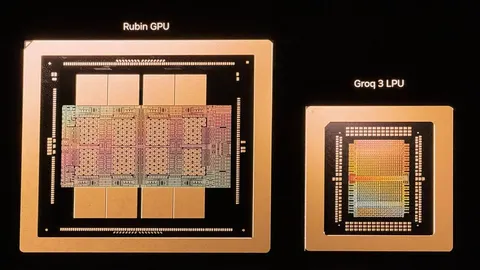
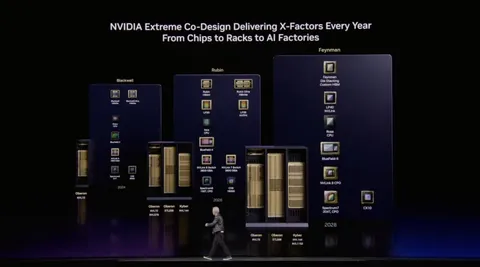
Vera is designed to operate as a core component of the Vera Rubin NVL72 platform, which binds 72 Rubin GPUs with 36 Vera CPUs and ships in the second half of this year. At GTC 2026, NVIDIA also unveiled the Groq 3 LPU as an inference alternative, building a Vera Rubin division of labor: GPUs for training, LPUs for raw inference, and Vera CPUs for agent environments.
To clarify, Vera is for the enterprise data center rather than the PC. The consumer Arm CPU N1X is a separate product rumored for a Computex 2026 debut. While Vera will not power desktops, NVIDIA's strategy to capture the core infrastructure of the AI factory is clearly visible.


- NVIDIA Newsroom - NVIDIA Launches Vera CPU, Purpose-Built for Agentic AI
- NVIDIA Newsroom - NVIDIA Vera Rubin Opens Agentic AI Frontier
- NVIDIA Investor Relations - NVIDIA Launches Vera CPU
- Tom's Hardware - NVIDIA unveils details of new 88-core Vera CPUs
- VentureBeat - NVIDIA introduces Vera Rubin, a seven-chip AI platform